
Pool Is Cloudy but Chemicals Are Fine? Here's What's Actually Going On
Your test kit says the water is balanced, but the pool is still hazy. Here are the four real causes, from high CYA to a tired filter, and how to tell which one you have.
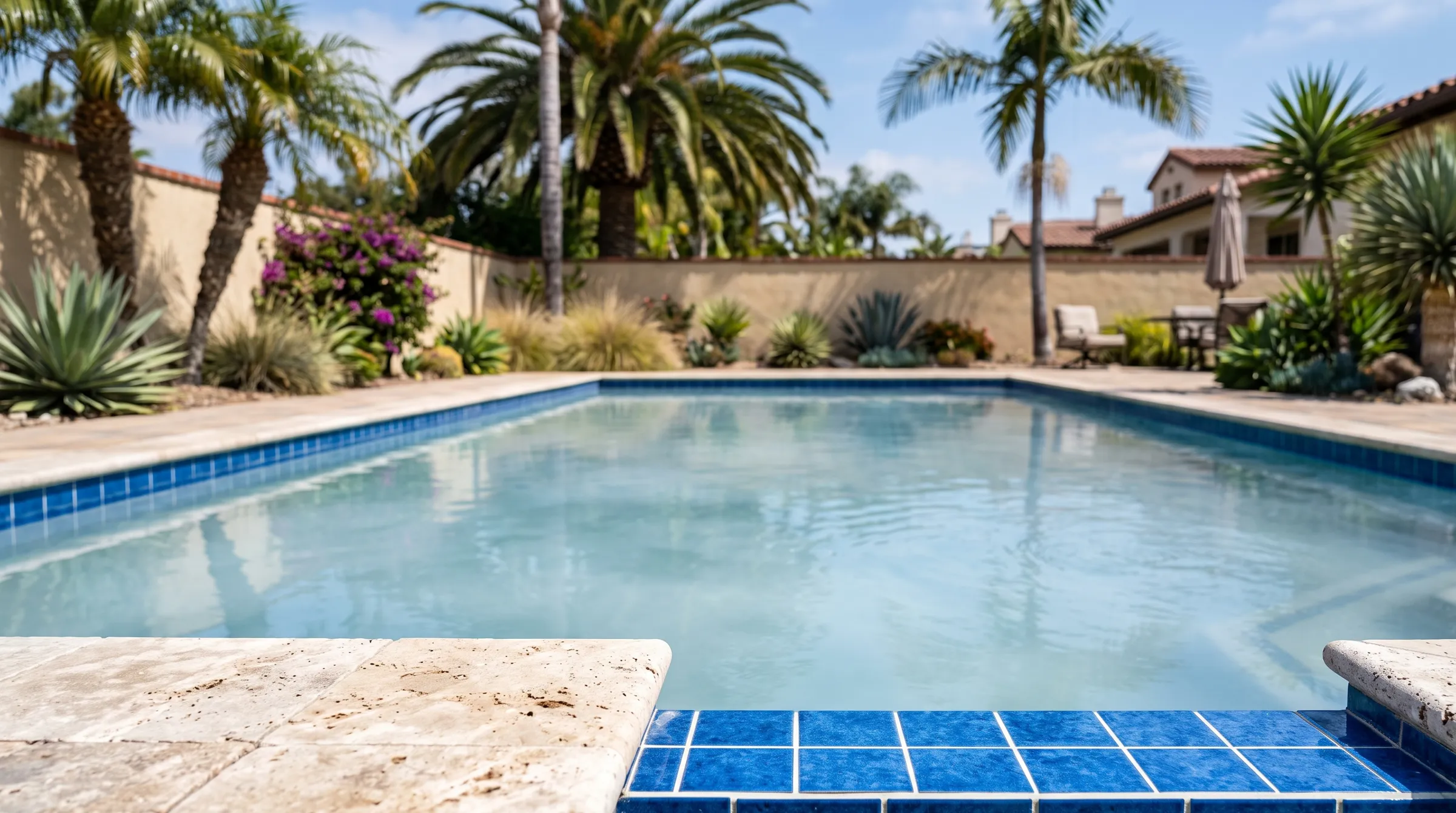
If your pool is cloudy but chemicals are fine on your test kit, the problem usually isn't simply too little chlorine. It's most often one of four things: stabilizer (CYA) too high for the chlorine you carry, so it can't keep up, calcium on the edge of coming out of solution, a filter that has stopped catching fine particles, or water that isn't circulating enough. We're Clear Conceptz, a family-owned Conejo Valley pool service, California licensed contractor #1089430. This is the order we work through when the water looks wrong but the test says it's right.
Pool is cloudy but chemicals are fine? Check what “fine” means
Start with what your test actually measured. Many test strips read chlorine, pH, and alkalinity well enough but give only a rough read on CYA and calcium hardness, and strips go stale in a hot garage. So “fine” often means “the numbers I can see are fine.” Get CYA and calcium from a drop-based kit or a pool store test, and confirm water is flowing from the return jets.
The four causes often stack, especially in summer.
| What you're seeing | Most likely cause | Where to look |
|---|---|---|
| Dull haze, walls feel slick, free chlorine low for your CYA level | Chlorine outmatched by high CYA, or early algae | CYA test, your chlorine source |
| Milky white cloud, often after shock or on hot days, rough waterline | Calcium coming out of solution | pH, alkalinity, calcium, water temperature |
| Haze that won't clear with the pump running | Filter not capturing fine particles | Filter media and pressure gauge |
| Cloud worst on steps and in corners, weak skimmer pull | Poor circulation or short run time | Pump schedule, return jets, water level |
Cause 1: Your CYA is too high and your chlorine is locked up
CYA, short for cyanuric acid and sold as stabilizer, shields chlorine from being burned off by sunlight. In a sunny Southern California backyard, some of it is essential. The catch is that CYA holds onto chlorine while it protects it, so the more CYA in the water, the less of your chlorine is actively sanitizing. People call this “chlorine lock,” though nothing is locked for good: the binding is reversible and shifts as CYA rises or falls. Your test still reads the chlorine, but it's working far more slowly than the number suggests. The first sign is usually a dull haze, before anything turns green.
One widely used rule of thumb keeps free chlorine at a set percentage of CYA, often put at around 7.5 percent as a minimum. Treat that as a guide, not a law. Either way, higher CYA means more chlorine for the same job.
CYA doesn't evaporate and breaks down only slowly, so it builds. The usual source is stabilized chlorine: the tablets in a floater or feeder (trichlor) and many granular shocks (dichlor).
The fix is dilution. Chasing high CYA with more chlorine gets impractical fast, and products sold to lower CYA have a mixed track record. A partial drain and refill is the dependable way down, but plan it: how much to drain, how low is safe for your pool, and where the water can legally go all vary. Afterward, an unstabilized chlorine source keeps CYA from climbing straight back.
Cause 2: Calcium hardness and a high saturation index
Water can only hold so much dissolved calcium. Past that point, calcium carbonate comes out of solution as microscopic particles: a milky cloud in the water, rough scale at the waterline.
No single number decides where that point is. It's the combination of pH, total alkalinity, calcium hardness, water temperature, and total dissolved solids. The Langelier Saturation Index (LSI) rolls those into one reading: near zero is balanced, positive means the water tends to deposit calcium, and negative means it tends to pull calcium out of plaster and grout. That's how every individual number can sit in its normal range while the combination tips toward clouding.
The Conejo Valley stacks the deck. The area is supplied with hard water, so every top-off adds calcium, and summer evaporation removes water while leaving the minerals behind. Warm water also holds calcium carbonate less readily than cool water, so a pool balanced in spring can tip as summer pushes the water temperature up. Common triggers for a sudden white cloud are pH creeping up, a dose of calcium hypochlorite shock (which adds calcium), or a hot stretch.
The fix is to work out which number is pushing the balance high, usually pH and sometimes alkalinity, and bring that one down gradually rather than dropping everything at once, which can swing the water corrosive. Then let the filter clear what already precipitated. Acid is the usual tool. If you add it yourself, wear eye protection and gloves, follow the label exactly, and never let it mix with chlorine products, which releases toxic gas. If calcium hardness has crept up over years of top-offs, a partial drain helps only if your fill water is softer than the pool water, so test that first. If the cloud comes with a crusty white band, our guide to calcium scale on your tile line covers that side.
Cause 3: Your filter is the problem, not your chemistry
Chemistry decides what's in the water. The filter decides whether it stays there. If the chemistry is genuinely balanced and the water is still hazy, the filter may be clogged, worn, or letting fine particles through.
- Sand filters catch the coarsest particles of the three, so fine haze can take longer to clear. Over years the grains wear smooth, and in hard water they can clump with calcium and oils, letting water channel through gaps instead of through the sand.
- Cartridge filters sit in the middle and are the most common on Conejo Valley residential pools. The pleated fabric loads with calcium, pollen, and oils and wears out with repeated cleaning. A torn, stiff, or collapsed cartridge is done.
- DE filters catch the finest particles. DE is a powder that coats internal grids and has to be replenished after every backwash or cleaning, or the filter underperforms. A torn grid sends DE back into the pool, often as a white puff at the return jets.
Your pressure gauge is the best clue. The reading right after a cleaning is your clean baseline, and your filter's manual says how much rise above it means it's time to clean. Pressure that rebounds quickly after cleaning means something is loading the media fast. Pressure that never rises while the water stays cloudy can mean water is getting around the media rather than through it.
A filter tank is a pressure vessel and the safe steps for opening one are specific to your model, which our pool filter repair guide explains. When media or internals need replacing, that's routine work for our pool filter and equipment repair crew.
Cause 4: Circulation and run time
A filter can only clean water that reaches it. Common culprits:
- Short pump schedules.Many pools run just long enough to turn the water over about once a day. That can hold a clear pool steady but often won't clear a cloudy one, and a variable-speed pump set very low can fall short too.
- Return jets aimed wrong. Pointing them slightly downward and all in the same direction gets the whole pool rolling, not just the surface.
- A starved skimmer. Low water, a full skimmer basket, or a clogged pump basket all cut flow, and low water can let the pump pull air.
- Dead zones. Steps, benches, and corners get little flow. Brushing pushes settled debris back into circulation.
While clearing a cloud, running the pump much longer, even around the clock for a few days, is often the most effective single change.
Is it safe to swim in a cloudy pool?
If you can't clearly see the main drain at the deepest point from the deck, don't swim. That's a visibility problem, not a chemistry one. In cloudy water, nobody can see a swimmer who has slipped under.
Also stay out when you're not sure the sanitizer is keeping up, since cloudiness can be an early sign that it isn't. When in doubt, wait until it's clear.
How long should it take to clear a cloudy pool?
Once the cause is fixed, a light haze usually clears within a day or two of continuous filtration. A heavier cloud can take several days. What changes that:
- Filter type. DE tends to clear fastest, sand slowest, cartridge in between.
- Whether the cause is really fixed. If CYA or the saturation balance is still off, the water keeps re-clouding.
- Filter condition. Clearing a cloud loads the media, so it often needs cleaning partway through.
- Pool size, pump speed, and new debris from wind, pollen, or swimmers.
If there's no visible improvement after two or three days of continuous filtration, go back over the chemistry, the filter, and the flow. Either the cause hasn't been found yet or the filter needs more time and a cleaning.
When cloudy water means you need a professional
Call someone when:
- The haze is turning greenor you can see algae. That's past a clarity problem, and it's what our green-to-clean recovery is for.
- CYA or calcium calls for a partial drainand you're not sure how far is safe or where the water can go.
- The filter is acting up: odd pressure, debris or DE returning to the pool, or worn media.
- You've corrected the chemistryand run the pump continuously for several days, and it's still cloudy.
On a cloudy pool, we test the full panel, including CYA and calcium, and check the filter and flow before adding anything, because the goal is fixing why it clouded. Catching that drift early is a big part of weekly pool service in the Conejo Valley: the same numbers checked every week, with a written service note after every visit.
Getting it cleared up
Cloudy water with good numbers has a cause worth finding before anything else goes into the pool. Clear Conceptz is a family-owned pool service, California licensed contractor #1089430, that's kept Conejo Valley pools swim-ready for 20+ years. Get a free, no-obligation quote, or call us at (805) 200-8360.
Frequently Asked Questions
Keep Reading
All Articles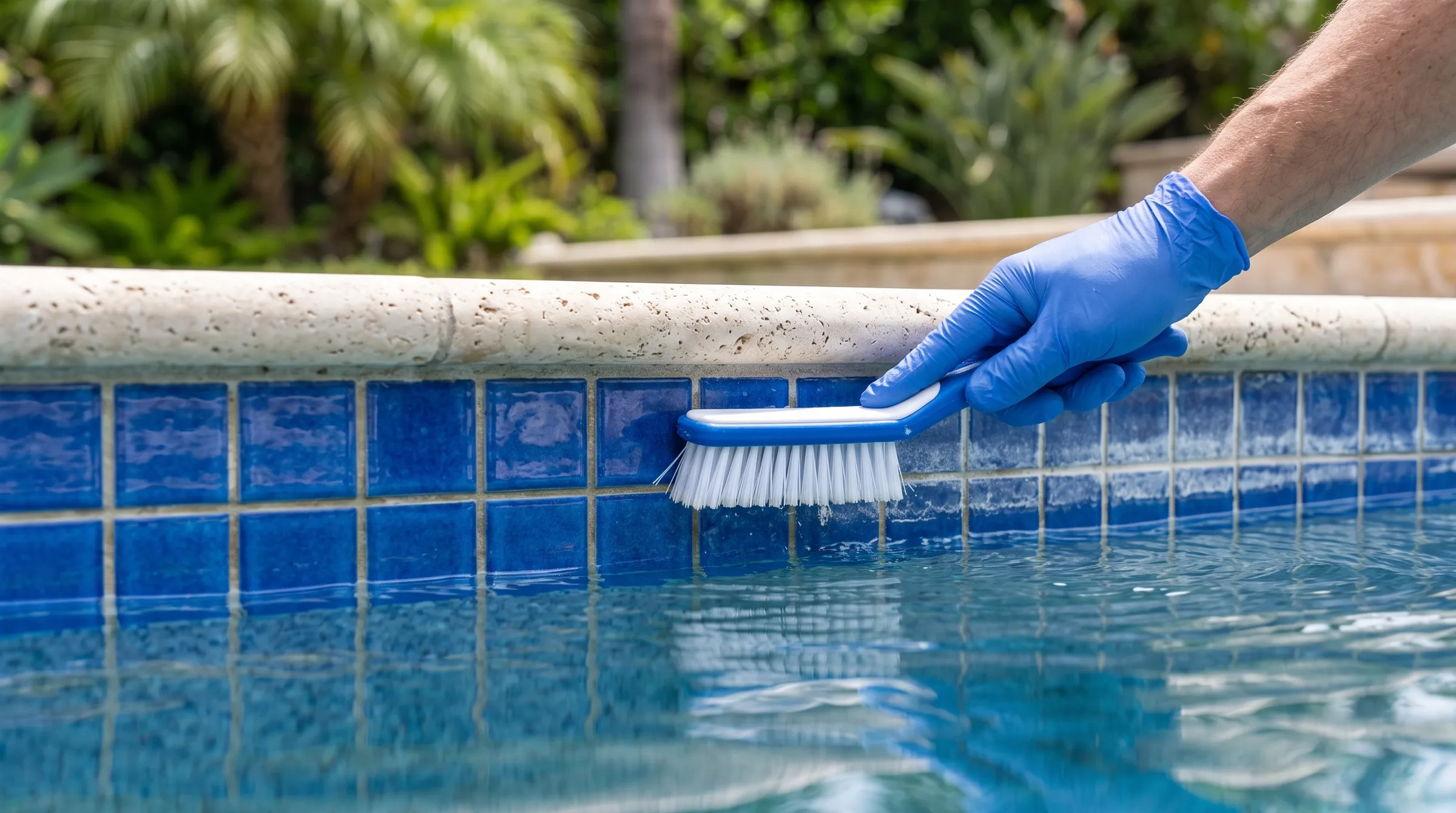
How to Clean Pool Tile (and When to Stop DIY-ing It)
Most waterline tile only needs a weekly brush and the right cleaner. Here's how to match the method to your tile and what's on it, which tools cause damage, and when calcium needs bead blasting.
Read Article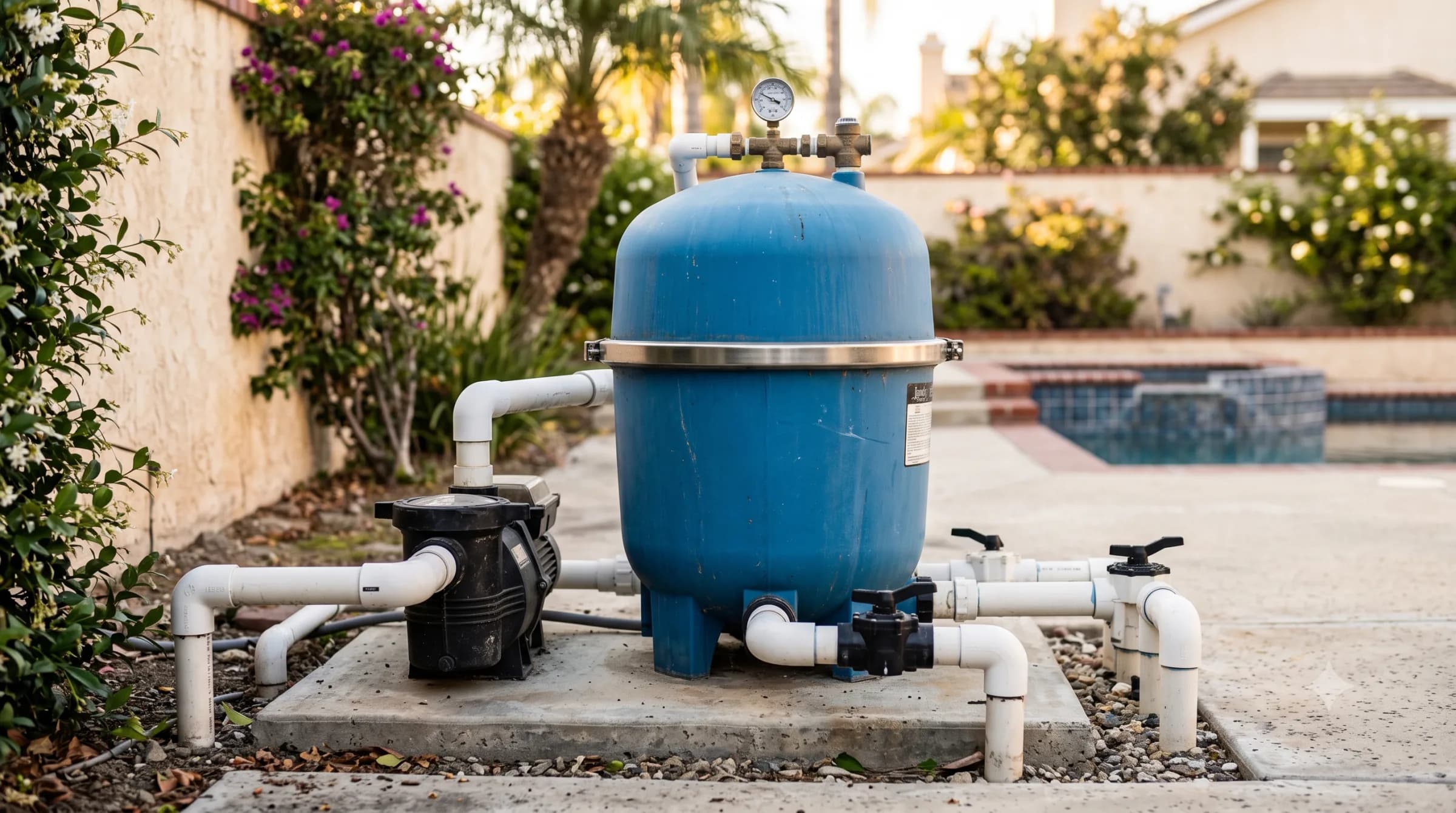
Pool Filter Repair: A Technician's Guide to What's Actually Wrong
High pressure, cloudy water, or a puddle under the equipment pad? Here's how we narrow down a filter problem, what's genuinely homeowner-level, and why the tank itself is the part to leave alone.
Read ArticleReady for a Cleaner Pool?
Clear Conceptz handles the maintenance, repairs, and restoration so you can just enjoy the water. Contact us today for a free estimate.