
What Is Pool Scale? The White Crust on Pool Tile, Explained
The chalky white band on your waterline tile is calcium your water left behind. Here's how to tell carbonate from silicate, what you can safely remove yourself, and when it needs a professional.
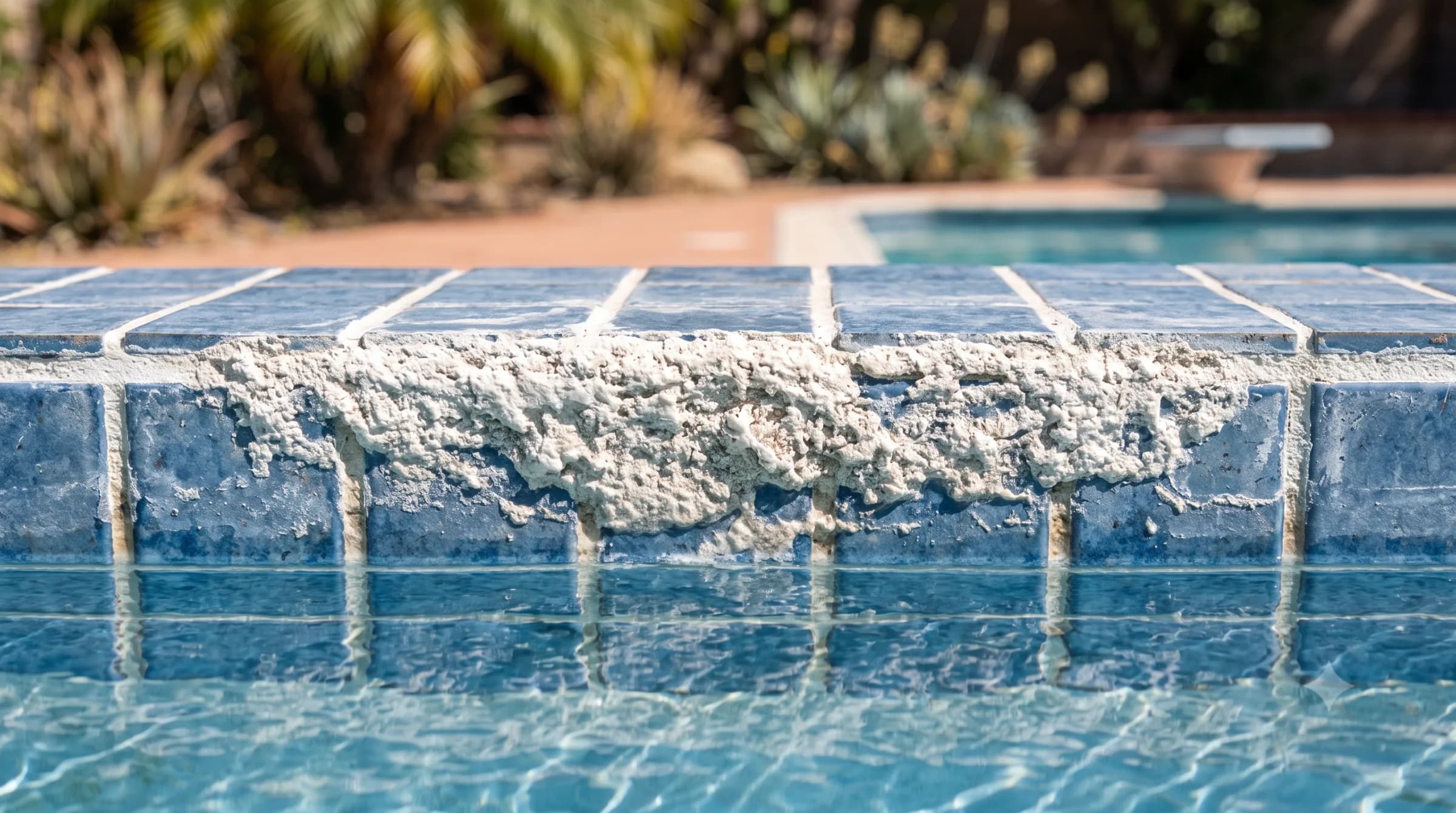
What is pool scale? It's the chalky white crust that builds up along your waterline tile, and it's calcium your water left behind. It's one of the most common things Conejo Valley pool owners ask us about, and it isn't a sign you've done anything wrong. Southern California's hard water carries a lot of dissolved minerals, and your pool's waterline is where they show up first. This guide covers what the crust actually is, how to tell which type you're dealing with, what you can safely remove yourself, and when it's worth calling for professional descaling.
What is pool scale, exactly? Calcium carbonate vs. calcium silicate
Pool scale is a mineral deposit, mostly calcium, that comes out of solution and bonds to tile, grout, and plaster. Your tap water arrives carrying dissolved calcium, which is what “hard water” means. When the water becomes oversaturated, that calcium can no longer stay dissolved and crystallizes onto the nearest surface. That's usually the waterline, where evaporation concentrates minerals and splashing leaves a repeated wet-dry edge.
There are two kinds, and they don't come off the same way.
- Calcium carbonate is the common one. It looks white and flaky, feels crumbly, and builds fastest when pH and total alkalinity run high. It's the more forgiving type to remove because it responds to acids.
- Calcium silicate is the stubborn one. It's grayish-white, noticeably harder and denser, and forms slowly over months or years. It resists the acid-based treatments that work on carbonate, so removing it is a mechanical job rather than a chemical one.
Telling them apart by eye is not always reliable, and the usual internet advice of dabbing muriatic acid on the deposit is not something we recommend. Muriatic acid is corrosive to skin, lungs, and eyes, and several tile manufacturers specifically warn against putting it directly on glass or glazed tile. If you want your deposit identified, ask a pool professional to look at it. It takes a minute on a service visit and costs you nothing in ruined tile.
Why Conejo Valley pools scale so quickly
Westlake Village and the surrounding Conejo Valley are supplied with hard water, and hard water is the raw material for scale. Three local realities stack up:
- Mineral-rich fill water. The water topping up your pool already carries calcium, so the mineral load in the pool builds over repeated fill cycles.
- High evaporation. Conejo Valley summers push water temperatures past 85°F, and dry Santa Ana wind spells accelerate evaporation. Water leaves as vapor, minerals don't, so what stays behind gets more concentrated.
- Chemistry drift. Scale forms when water becomes oversaturated with calcium carbonate. Rising pH, rising total alkalinity, and higher water temperature all push it in that direction, which is exactly what a hot SoCal summer does to a pool left unattended.
Put those together and a pool here can grow a visible waterline ring in a single hot season. That's why we treat calcium as a routine part of maintenance in this market rather than an occasional surprise.
What scale looks like
Scale shows up in more than one place, and catching it early makes removal easier:
- A crusty waterline ring. The classic white or gray band right at the water's surface, rough to the touch. This is where almost everyone notices it first.
- Rough, sandpapery plaster. Run your hand along the steps or walls. Scale on plaster feels gritty, and a rough surface holds dirt and algae more readily than a smooth one, which makes routine cleaning harder.
- Persistent dullness on tile. A thin mineral film can leave glass or ceramic looking hazy even when the water itself is balanced and clear.
If it wipes away with a brush, it's early. If it's a hard crust you can catch a fingernail on, it's set and will need a real removal method.
DIY removal: what works, and what wrecks your tile
For light, fresh calcium carbonate on glazed ceramic or porcelain tile, a careful DIY pass can work. A pool-safe calcium remover, which is a mild acid-based product sold for exactly this, will soften a thin waterline film. A diluted white vinegar solution can also lift very light, fresh carbonate, and some tile manufacturers suggest it for routine waterline cleaning. Be realistic about it though: vinegar is slow, and on a hardened crust it is not a practical tool.
Where DIY goes wrong:
- Surface first, method second. Never use a pumice stone on glass tile, Pebble Tec, polished stone, or natural stone like marble, travertine, or limestone. Pumice will scratch them, and on glass the haze is permanent. Acidic descalers can also etch natural stone. If you don't know what your tile is, stop and ask before touching it with anything abrasive.
- Pumice is a last resort even where it's safe. On glazed ceramic it can lift thin deposits, provided both the stone and the tile stay soaking wet the entire time. Used dry, or used with pressure, it scratches.
- Pumice is the wrong tool for silicate. Silicate is hard and tightly bonded, so hand-scrubbing a whole waterline is impractical and you're likely to damage the surface before you finish. Silicate is what professional media blasting exists for.
- Don't pour acid into the pool to fix scale. It swings your chemistry, can etch plaster, and doesn't meaningfully touch a bonded deposit. More acid is not the answer to a mineral problem.
The honest limit is this: DIY handles thin, fresh carbonate on durable glazed tile. Anything hardened, widespread, on a delicate surface, or silicate is past the point where a homeowner tool helps, and pushing harder is how tile gets damaged.
When to call a pro
When scale is thick, runs the length of the waterline, sits on glass or Pebble Tec, or turns out to be silicate, it's time for professional removal. Our professional pool tile cleaning and calcium removal uses bead blasting, a fine abrasive media delivered at controlled low pressure that lifts calcium off tile without the scratching a hand-held pumice stone causes.
What matters is that the work is matched to your surface. Glass tile and Pebble Tec need extra care, because aggressive methods can scratch or chip them, so the media, pressure, and technique get adjusted to the tile rather than the other way round. Our process is designed to work at your current water level, so there's no full drain and refill and no rebalancing a drained pool from scratch, and we use non-hazardous, biodegradable cleaning materials. After cleaning we can apply a professional-grade sealer to help slow how quickly calcium returns and stretch the interval between cleanings.
Plaster is a different conversation. An acid wash removes a very thin layer of the plaster surface itself to expose cleaner material underneath, which can help with staining and discoloration. It is worth being clear that acid washing is itself an etching process, a plaster surface can only take it a limited number of times over its life, and it will not repair plaster that is already badly etched or failing. That's a job to scope in person rather than attempt with hardware-store acid.
Preventing scale: the balance that actually matters
You can't change how hard the tap water is, but you can keep calcium in solution instead of on your tile. Common target ranges for a Southern California pool:
- pH: 7.4 to 7.6. Rising pH is the fastest route to carbonate scale.
- Total alkalinity: 80 to 120 ppm.
- Calcium hardness: 200 to 400 ppm is the usual comfortable band.
Treat those as starting points rather than hard limits. Scale risk isn't set by any single number: it's the combination of pH, carbonate alkalinity, calcium hardness, water temperature, and total dissolved solids, which is what the Langelier Saturation Index describes. A pool can sit above 400 ppm calcium without scaling if the rest of the balance is managed, and a pool can scale below it if pH and alkalinity are allowed to climb through a hot summer.
Two practical habits help more than chasing one reading. Brush the waterline weekly, so film gets knocked down before it hardens. And keep the water level steady, because letting a pool drop and then refilling in large slugs swings the chemistry hardest. Over years of topping up with hard fill water the mineral load does climb regardless. When hardness gets high enough, the usual remedy is a partial drain and refill rather than more chemicals, though that only lowers hardness if the water you refill with is softer than what's already in the pool. In a hard-water area that's worth checking before you drain anything.
Staying on top of the numbers week to week is the point of consistent weekly pool service. Regular testing and brushing keep the balance from drifting through the summer and catch a waterline ring while it's still thin, which is the difference between a quick clean and a full descaling job.
Getting the crust off for good
Scale is simply what hard water does to a pool, but the white crust doesn't have to stay. If your waterline is past the point a brush can handle, we'll take a look and give you a firm quote before any work starts. Clear Conceptz is a family-owned pool company, California licensed contractor #1089430, that's kept Conejo Valley pools swim-ready for 20+ years, and we offer reliable pool service in Westlake Village and across Ventura, Santa Barbara, and Los Angeles counties. Contact us today for a free estimate, or call (805) 200-8360.
Frequently Asked Questions
Keep Reading
All Articles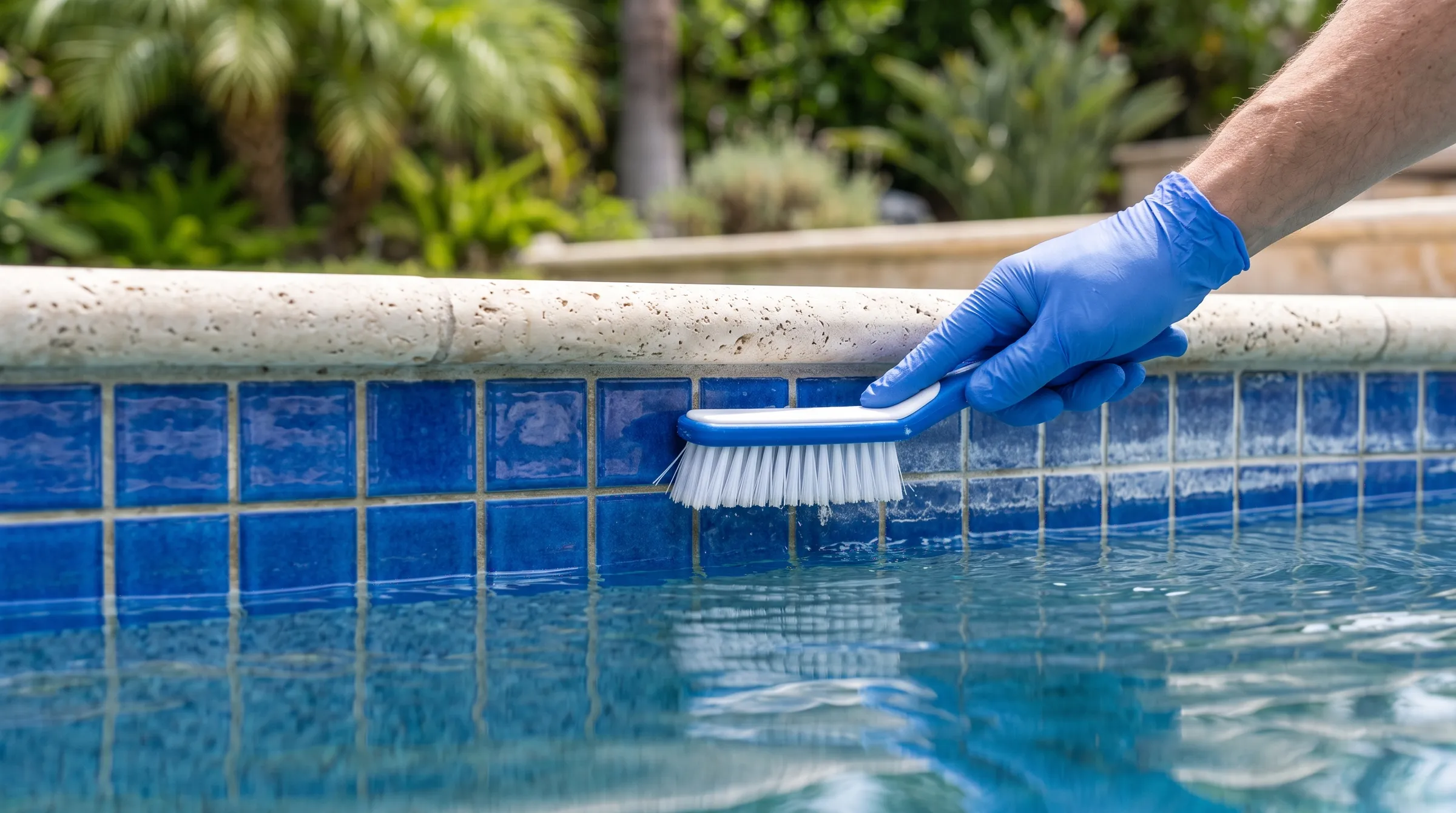
How to Clean Pool Tile (and When to Stop DIY-ing It)
Most waterline tile only needs a weekly brush and the right cleaner. Here's how to match the method to your tile and what's on it, which tools cause damage, and when calcium needs bead blasting.
Read Article
Pool Is Cloudy but Chemicals Are Fine? Here's What's Actually Going On
Your test kit says the water is balanced, but the pool is still hazy. Here are the four real causes, from high CYA to a tired filter, and how to tell which one you have.
Read ArticleReady for a Cleaner Pool?
Clear Conceptz handles the maintenance, repairs, and restoration so you can just enjoy the water. Contact us today for a free estimate.