
How to Clean Pool Tile (and When to Stop DIY-ing It)
Most waterline tile only needs a weekly brush and the right cleaner. Here's how to match the method to your tile and what's on it, which tools cause damage, and when calcium needs bead blasting.
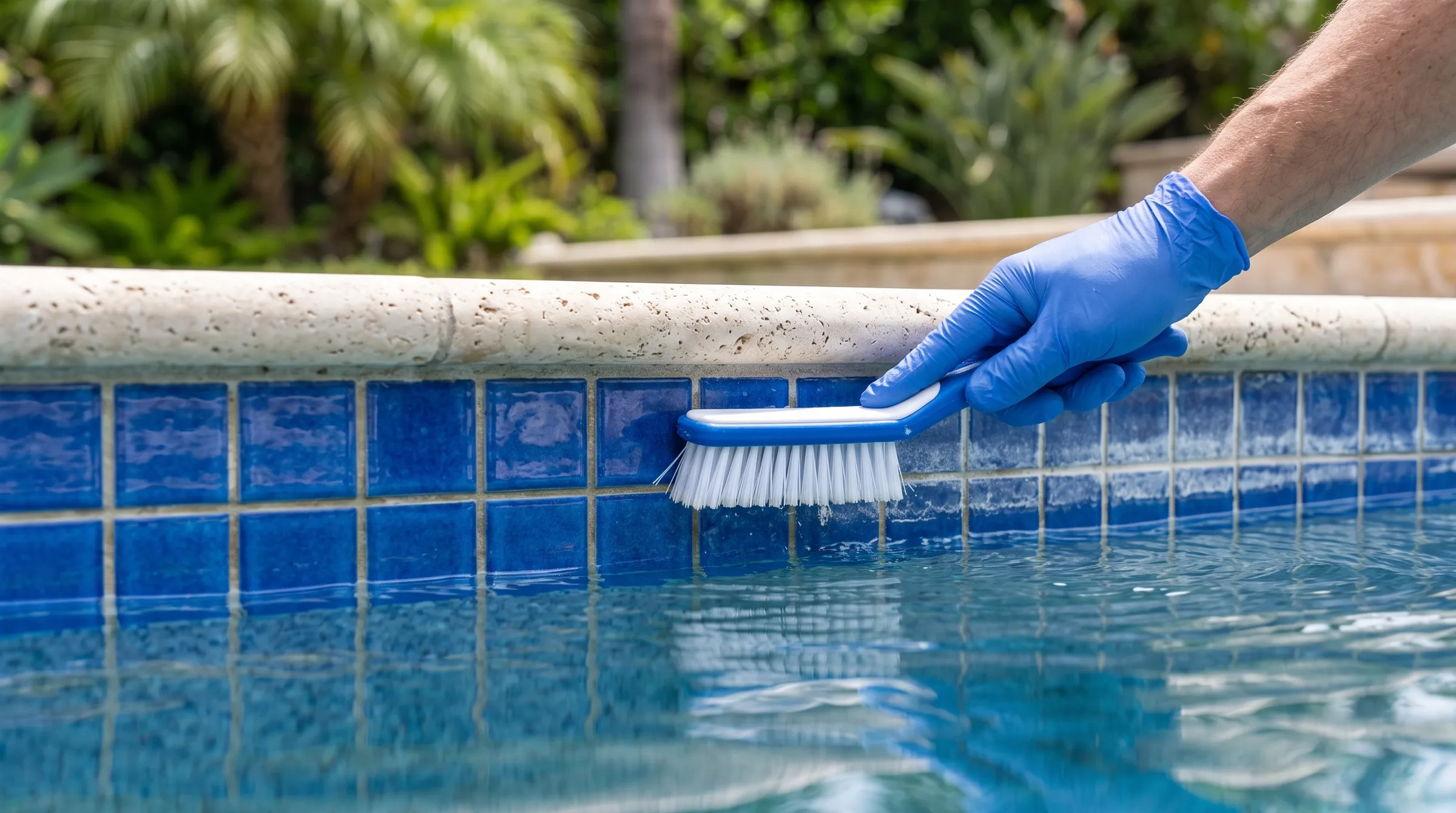
Knowing how to clean pool tile comes down to two questions most online advice skips: what's actually on the tile, and what the tile is made of. Get those right and waterline cleaning is a simple weekly habit. Get them wrong and a pumice stone or a splash of acid can leave scratches and etching that no cleaner takes back out. Here's the method we'd give a neighbor in Westlake Village, and where DIY stops making sense.
Answer first: the short version
For most pools, cleaning waterline tile means brushing it weekly with a nylon tile brush or non-scratch sponge and a cleaner made for pool tile that suits your tile type. That handles the everyday grime line. A hard white or gray crust that won't budge is calcium scale, and removing it is a different job.
The method, in order:
- Identify the deposit. Grime, scale, and algae each need a different approach.
- Identify the tile. Glazed ceramic, glass, stone, and pebble finishes tolerate very different tools.
- Clean at the current water level with a brush or sponge and a pool tile cleaner, following the label.
- Skim, run the filter, and test the water after a heavy cleaning.
- Stop when the gentle method stops working. A harsher tool is more likely to damage the tile than remove the deposit.
Step 1: Figure out what's on the tile
Look closely and run a fingertip along the tile before you pick up any product.
- A grime line.A gray, tan, or brownish band that feels slick or greasy. It's body oils, sunscreen, and airborne debris. In the Conejo Valley, oak and eucalyptus pollen and Santa Ana wind dust add to it quickly. A brush and a pool tile cleaner are made for exactly this.
- Calcium scale.A white or grayish-white crust that feels rough or hard, sometimes like sandpaper, and doesn't soften when you scrub. That's hard-water minerals bonded to the tile. We've covered what pool scale is and why it forms in its own guide.
- Algae. Green, black, or yellowish spots, often in grout lines, corners, and shaded steps. Brushing helps, but algae on tile is a sanitizer and circulation problem first, so it keeps coming back until the water is corrected.
A mark that's flat and colored rather than raised may be a metal or organic stain instead. Stains need their own diagnosis, and scrubbing harder won't help.
Step 2: Know what your tile is made of
The same tool can be fine on one tile and ruin another. Here's how the common waterline surfaces compare.
| Surface | Fine for routine cleaning | Avoid |
|---|---|---|
| Glazed ceramic or porcelain | Nylon brush, non-scratch sponge, pool tile cleaner. Pumice only on light deposits, with stone and tile kept soaking wet | Dry pumice, metal scrapers, steel wool |
| Glass tile | Soft sponge, nylon brush, a cleaner labeled safe for glass tile | Pumice, scouring pads, scrapers, acid unless the tile maker approves it |
| Natural or polished stone (marble, travertine, limestone) | Soft brush, a pH-neutral cleaner made for stone | Acids including vinegar, pumice, pressure washing |
| Pebble finishes such as Pebble Tec | Nylon brush, a cleaner compatible with the finish | Pumice, abrasive pads, pressure washing |
| Not sure | Treat it like glass: soft sponge and a gentle cleaner only | Anything abrasive or acidic until it's identified |
If you don't know your tile, check the builder's paperwork. Glass usually has a translucent depth while glazed ceramic is opaque, but some tiles are hard to tell apart by eye. Where your tile maker publishes care guidance, follow it. It overrides any general rule, including ours.
How to clean pool tile without draining
You don't need to drain your pool to clean waterline tile, and we don't recommend it for tile work. Draining carries its own risks, including damage to plaster and, under some ground conditions, to the pool shell itself. Routine brushing works at the current water level. A few products call for lowering the water a few inches to reach and rinse the waterline; if yours does, follow the label. A simple weekly routine:
- Brush first. Run a nylon tile brush along the full waterline, reaching a few inches below the surface where film collects.
- Put the cleaner on the brush or sponge. Follow the label for how much to use and how long to leave it.
- Work in short sections. Scrub a stretch, wipe it, and move on.
- Clear what you loosened. Skim, and let the pump and filter capture what you lifted.
- Test the water afterward. Whatever you scrubbed loose ends up in the pool, so check your sanitizer after a heavy clean.
This routine is also the part of weekly pool service that does the most to keep scale from getting a foothold. Film that gets brushed off every week never gets the chance to harden.
What about pumice stones, acid, and pressure washers?
These three come up in almost every forum thread about pool tile, and all three can do real damage on the wrong surface.
Pumice stones.A pumice stone can lift light deposits from glazed ceramic or porcelain, provided both the stone and the tile stay soaking wet the whole time. Check your tile maker's care guidance first and try it on a hidden spot, since some glazes scratch more easily than others. It is never safe on glass tile, Pebble Tec, polished stone, or natural stone, because the scratches it leaves are permanent. Keep it off the grout too, which is softer than the glaze. If you're not sure what your tile is, leave the pumice in the drawer.
Acid.Mild, pool-safe calcium removers sold for waterline tile can soften a thin film on glazed ceramic or porcelain when used exactly as labeled. Muriatic acid is a different matter. It's corrosive to skin, eyes, and lungs, gives off strong fumes, and can etch grout, plaster, and natural stone. Several tile manufacturers warn against using it directly on glass or glazed tile. Pouring acid into the pool to treat scale swings your chemistry without doing much to a bonded deposit. That's why we leave acid work to trained technicians and don't publish a how-to for it. If you buy any acid-based product, the product label and your tile manufacturer's guidance are the rules to follow, not a forum post.
Pressure washers.A pressure washer is a poor match for pool tile. A concentrated stream can gouge grout, chip tile edges, etch soft stone, and damage glass tile, and water forced into the joints can get behind tiles that are already loose. It also does little to hardened calcium unless the pressure is high enough to put the grout at risk. We don't recommend them for waterline tile, and the same goes for metal scrapers and razor blades, which can scratch glaze and glass.
What is bead blasting, and when do you need it?
Bead blasting is a professional tile-cleaning method that uses a fine abrasive media delivered at controlled low pressure to lift calcium off tile. It's the method we use for our professional pool tile cleaning and calcium removal, and it's meant for the deposits a brush and cleaner can't touch.
You likely need it when:
- The crust is hard and a cleaner with a brush doesn't soften it.
- Scale runs the length of the waterline, not just a few spots.
- The deposit sits on glass, a pebble finish, or stone. DIY abrasives are off the table there, and whether blasting suits the surface is a call to make after seeing it.
Our process works at your current water level, with no draining and refilling, and cleaning residue is vacuumed from the pool during the process. After cleaning, we can apply a professional-grade sealer to help slow how quickly calcium returns and stretch the time between cleanings.
Bead blasting still has to be matched to the surface. Glass tile needs extra care, because aggressive methods can scratch or chip it, so our technicians use glass-safe equipment and techniques on it. Pebble Tec, brick coping, and flagstone trap buildup differently than smooth tile, and they get specialized techniques of their own. We look at the surface before quoting. If tiles are loose or cracked or the grout is failing, that's a repair to handle alongside the cleaning, not something blasting fixes.
Keeping it clean: Conejo Valley hard-water prevention
The Conejo Valley runs on hard water, and summer heat and dry wind speed up evaporation. Water leaves, minerals stay, and they land on the waterline. A few habits help:
- Brush weekly.It's the single habit that matters most.
- Keep the water level steady. Letting the pool drop and then refilling in big batches swings the chemistry hardest.
- Don't let pH and alkalinity climb. Rising pH and alkalinity push calcium out of the water and onto your tile, especially in hot weather. Our scale guide covers the target ranges.
- Keep oils out. A quick rinse before swimming keeps a lot of sunscreen off the tile.
- Plan on periodic professional cleaning. For most Conejo Valley pools, once or twice a year keeps the waterline in good shape. Pools that run warm, see heavy use, or get topped up often through the summer tend to need it more.
Getting your waterline back
Clean tile is mostly a weekly habit and the right tool for your surface. When the waterline is past what a brush can handle, we'll look at your tile, tell you what's on it, and give you a firm quote before any work starts. Clear Conceptz is a family-owned pool company, California licensed contractor #1089430, that's kept Conejo Valley pools swim-ready for 20+ years, and we offer reliable pool service in Westlake Village and across Ventura, Santa Barbara, and Los Angeles counties. Contact us today for a free estimate, or call (805) 200-8360.
Frequently Asked Questions
Keep Reading
All Articles
Pool Is Cloudy but Chemicals Are Fine? Here's What's Actually Going On
Your test kit says the water is balanced, but the pool is still hazy. Here are the four real causes, from high CYA to a tired filter, and how to tell which one you have.
Read Article
Pool Filter Repair: A Technician's Guide to What's Actually Wrong
High pressure, cloudy water, or a puddle under the equipment pad? Here's how we narrow down a filter problem, what's genuinely homeowner-level, and why the tank itself is the part to leave alone.
Read ArticleReady for a Cleaner Pool?
Clear Conceptz handles the maintenance, repairs, and restoration so you can just enjoy the water. Contact us today for a free estimate.