
What Is a Pool Acid Wash? Cost, Process, When You Need One
An acid wash strips a thin layer of plaster to lift set-in stains, and that plaster never grows back. Here's what it does, what drives the cost, and when we'd tell you not to do it.
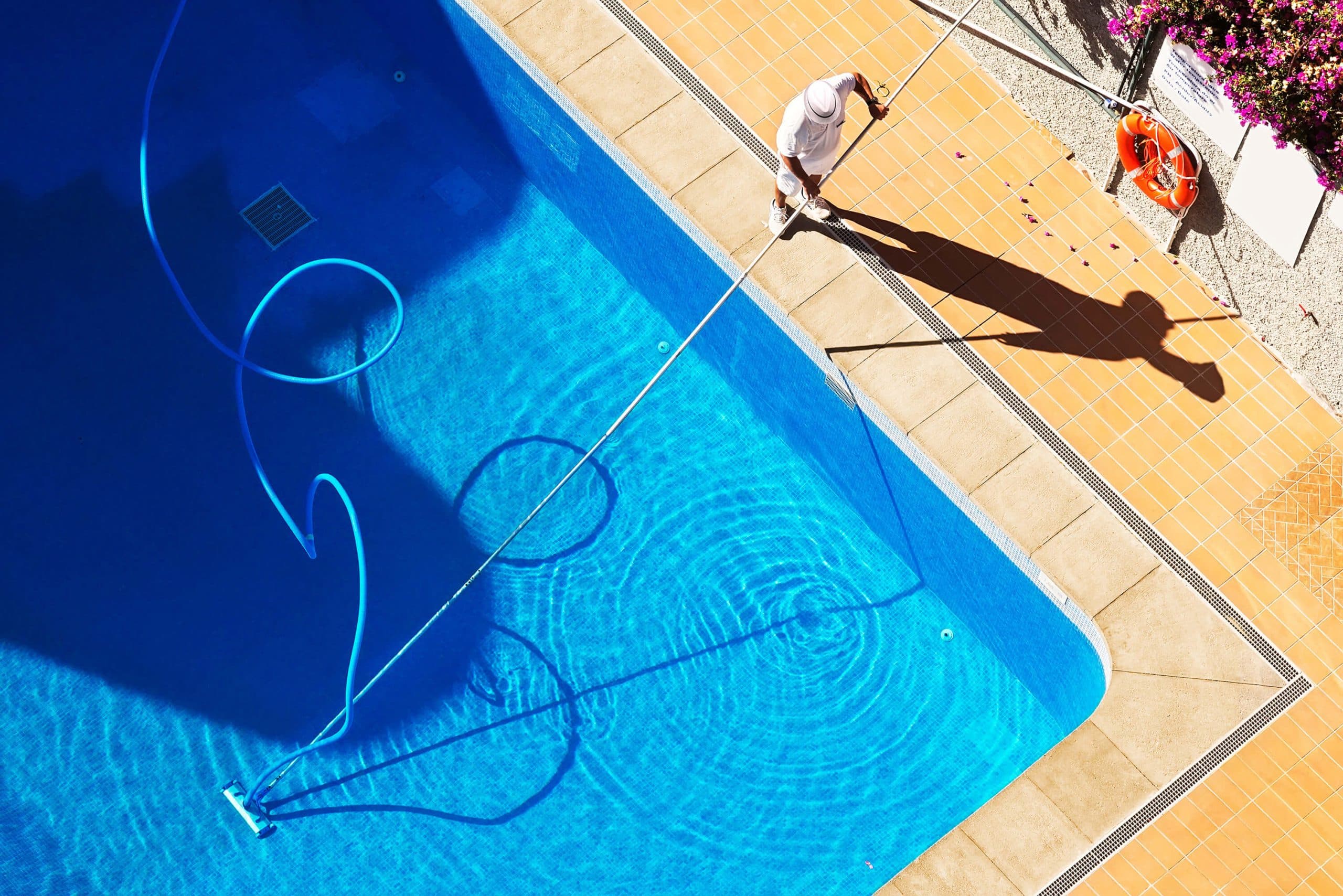
What is a pool acid wash? It's a deep surface treatment for plaster pools. The pool is drained, a diluted acid solution is worked over the plaster, and it dissolves a very thin layer of the surface to expose cleaner, brighter plaster underneath. It can make a stained, dingy pool look dramatically better. It also permanently removes part of your pool's finish, and that's the part most guides skip. This guide covers what an acid wash does, the signs you need one, what drives the price, and when we'd tell you not to do it at all.
What is a pool acid wash, and what does it do to your plaster?
Pool plaster is a cement-based finish troweled over the pool's concrete shell. Over the years, stains, algae, and minerals work their way into the top of that surface. Brushing and balanced water can't reach them anymore, because they're no longer sitting on the plaster. They're in it.
An acid wash takes the top of the plaster away. The acid is muriatic acid, a form of hydrochloric acid, diluted with water. It dissolves a thin skin of the cement along with the stains trapped there, leaving a fresh layer that hasn't seen years of sun, chemistry, and debris.
That's why it works, and it's also why it has a cost beyond the bill. Plaster doesn't grow back. Every wash leaves the finish a little thinner, and a plaster surface can only take a limited number of washes over its life.
A few things an acid wash is not:
- It's not routine maintenance. It's an occasional reset, often many years apart, and some pools never need one.
- It's not for every finish. It's a plaster treatment. Vinyl liner and fiberglass pools are not candidates, and pebble or quartz aggregate finishes need the finish manufacturer's guidance before anyone puts acid on them.
- It's not a repair. It won't fix plaster that is cracking, flaking, or already rough and worn.
Signs your pool needs an acid wash (and signs it needs something else)
"My pool looks bad" has several causes, and most of them have a gentler fix. Here's how we sort it out.
Signs an acid wash may be the right call:
- Discoloration across most of the plaster, not just a spot or two. The pool looks gray, mottled, or dingy even with clear, balanced water.
- Algae staining left behind after a green pool. When a pool sits green for weeks or months, algae can stain the plaster after the water itself is clear again. This is the classic case.
- Widespread mineral staining that targeted stain treatments have already failed to lift.
Signs you need a stain treatment instead:
- Localized stains. A brown patch where leaves settled, or a dark ring around a drain. Oak and eucalyptus debris blown in by the Santa Ana winds can leave brown organic stains, and those often lighten with targeted chlorine treatment once the debris is gone.
- Rust-brown or blue-green stains. These are often metal stains, from iron or copper in the water or from corroding equipment. They frequently respond to a stain treatment done without draining, and an acid wash won't stop them returning if the metal source isn't fixed.
Signs you need tile cleaning instead:
- A white or gray crust at the waterline. That's calcium scale buildup, and it's extremely common with Conejo Valley hard water. At the waterline it builds up mostly on the tile, and it's handled with professional pool tile cleaning, not a drain and acid wash.
If you can't tell which of these you're looking at, that's normal. A stain's color, location, and texture tell a technician a lot, and the right diagnosis can save you a drain and refill you didn't need.
What drives the price of an acid wash
We don't publish a flat price for an acid wash, because no two jobs are the same size. Here's what moves the number:
- Pool size. More plaster means more labor, more acid and neutralizer, and more water to drain and refill.
- How bad the staining is. A light refresh is a different job from a pool that has been green for months.
- The drain and refill. Draining takes time and equipment, and refilling means buying a full pool of water. In a hard-water area, that fill water brings its own chemistry to manage.
- Neutralizing and disposal. The acid water has to be neutralized and discharged the way your city requires.
- Startup after the refill. Freshly exposed plaster needs careful balancing as the pool comes back online, which means chemicals and follow-up visits.
- What else gets done while it's empty. Many owners pair an acid wash with tile cleaning, since a drained pool is the easiest time to reach the full tile line.
The cheapest acid wash is the one you don't need, which is why the diagnosis matters more than the price. We'll look in person and give you a firm quote before any work starts.
When we tell you not to acid wash
This is the section we'd want to read if we were the homeowner. An acid wash is the wrong call when:
- The plaster is already thin. If the darker shell shows through in spots, or the surface looks patchy and worn, there may not be enough plaster left for another wash.
- The plaster is old or failing. Rough, pitted, flaking, or delaminating plaster won't improve by removing more of it. Acid can make a worn surface rougher, and rough surfaces hold dirt and algae. At that point the honest answer is replastering.
- It has already been acid washed several times. Ask the previous owner or pool company if you can. There's no fixed number of washes that fits every pool. It depends on how thick the plaster was applied, how many washes it has had, and how aggressive each one was.
- The real problem is something else. Metal stains, waterline scale, and spot stains have targeted fixes. Draining a pool for a problem a treatment could solve costs you plaster for nothing.
- Draining is risky. Groundwater pressure can push an empty pool shell upward or crack it, especially after heavy rain or where the water table is high. Plaster left dry in the sun too long can also crack. Whether and when to drain is a call for someone who has seen your pool.
When an acid wash is off the table, there's usually still a path: a stain treatment, tile cleaning, or a conversation about replastering. If the plaster is thin or failing, a no-drain acid treatment is off the table too, because it etches the same plaster.
No-drain acid wash: when that's an option
A "no-drain acid wash" drives the water's chemistry far into the acidic range for a set period, so the water itself works on the surface, then brings it back to normal. It can make sense for mild, even staining where a full drain isn't worth the cost or the risk. Know what it is, though:
- It's still an etch. Water that acidic dissolves plaster, just more gradually.
- It's hard on equipment. Highly acidic water can corrode heaters, metal fittings, ladders, and light rings.
- It's less dramatic. It won't do what a full acid wash does on heavy, set-in staining.
- Rebalancing is the hard part. Bringing a full pool back from very low pH takes a lot of chemistry and testing.
- It's not for thin or failing plaster. The same limits on a full acid wash apply here.
- No one swims while it's acidic. Keep people and pets out of the pool until the pH and alkalinity are back in the normal range and the water has been tested. Adding that much acid also gives off fumes, so it calls for eye protection, gloves, and good airflow.
This is not a weekend project. Done wrong, it damages the plaster and equipment it was meant to save.
Why DIY acid washing goes wrong
Hardware stores sell muriatic acid, and plenty of videos make acid washing look like a weekend chore. Here's why we recommend leaving the acid work to a professional:
- The fumes are dangerous. Muriatic acid vapor burns the eyes, nose, throat, and lungs. In a drained pool you're working below ground level, where fumes can collect.
- Mixing mistakes are serious. Acid and chlorine products must never be combined. Together they release toxic chlorine gas. Pros also always add acid to water, never the reverse, because getting it backward can make it splatter violently.
- Uneven etching is easy. Acid left on too long, applied to dry plaster, or worked in hot sun can burn permanent streaks and blotches into the finish.
- Collateral damage. Splashes and runoff can etch tile, coping, decking, and metal fittings. Some tile and stone surfaces are damaged by acid on contact, so putting acid on a surface you can't identify is how expensive mistakes happen.
- Disposal is regulated. Ordinary pool water can sometimes go to the street or storm drain, but only after it's dechlorinated and its pH is in range, and some cities want notice or a permit first. Acid wash water is different. It's a cleaning waste, and it can't go to the street or storm drain, even after it's neutralized. Where it can go depends on your city and sewer agency. Some allow the sanitary sewer with permission, some require a permitted connection, and some don't allow pool waste in a sewer cleanout at all. Check with your city and sewer agency before any water leaves the pool.
Even for routine balancing, wear eye protection and gloves, follow the label exactly, and keep acid and chlorine products stored and used separately.
What the process looks like start to finish
Here's what a professional acid wash generally involves. The details are set after an in-person look.
- Diagnosis. Confirm the finish is plaster, check its thickness and condition, ask about previous washes, and rule out problems a targeted treatment could fix.
- Drain. Pump the pool down and discharge the water the way your city allows, with an eye on groundwater risk.
- Clean out. Remove debris and sediment so the acid works on plaster, not dirt.
- Wet the surface. Plaster is kept wet ahead of the acid so it doesn't absorb the solution unevenly.
- Apply and brush in sections. Diluted acid goes on one section at a time, is brushed, and is rinsed off promptly so no area sits too long.
- Neutralize. The acidic rinse water collected in the deep end is neutralized, typically with soda ash, before it's pumped out to wherever your city and sewer agency allow.
- Rinse and inspect. A second pass on stubborn areas is a judgment call, weighed against the plaster it costs.
- Refill and start up. Refill and balance the new water carefully, testing closely through the first weeks, because freshly exposed plaster affects the chemistry.
The acid work itself is usually the shortest part. Draining and refilling take most of the calendar time, and both depend on your pool's size and your water pressure.
An acid wash is a reset, not a cure. Whatever stained the plaster will stain it again if nothing changes. That's where you keep it from getting that bad again with weekly service: steady chemistry, regular brushing, and debris cleared before it leaves a mark. If your pool is green right now, our green-to-clean service starts by finding out why it turned, then recovers the water before deciding whether the plaster needs an acid wash.
A stained pool isn't always a lost cause, and it isn't always an acid wash either. We'll look at your plaster and tell you what's causing the stains. Sometimes the honest answer is "don't wash it." Clear Conceptz is a family-owned pool company, California licensed contractor #1089430, that has kept Conejo Valley pools swim-ready for 20+ years across Ventura, Santa Barbara, and Los Angeles counties. Contact us today for a free estimate, or call (805) 200-8360.
Frequently Asked Questions
Keep Reading
All Articles
How to Clean Pool Tile (and When to Stop DIY-ing It)
Most waterline tile only needs a weekly brush and the right cleaner. Here's how to match the method to your tile and what's on it, which tools cause damage, and when calcium needs bead blasting.
Read Article
Pool Is Cloudy but Chemicals Are Fine? Here's What's Actually Going On
Your test kit says the water is balanced, but the pool is still hazy. Here are the four real causes, from high CYA to a tired filter, and how to tell which one you have.
Read ArticleReady for a Cleaner Pool?
Clear Conceptz handles the maintenance, repairs, and restoration so you can just enjoy the water. Contact us today for a free estimate.